
Canary Wharf
How our internal drainage experts solved an ongoing issue that was seriously disrupting the headquarters of a FTSE 100 financial services firm.
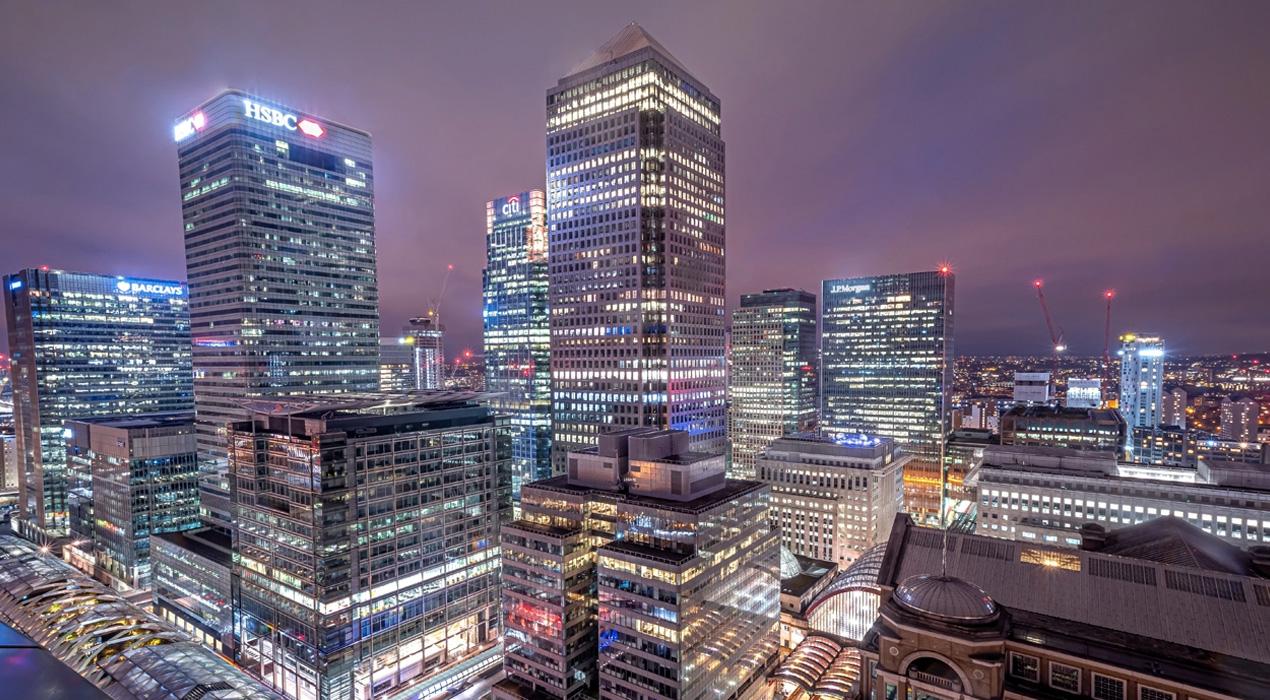
The global headquarters of a major investment bank. This landmark tower is 156m tall, with 32 storeys and almost 1.7 million sq. ft. of floor space.
The problem:
Repeated internal blockages across multiple floors and stacks, leading to system shutdowns, flooding and 4+ call-outs every week.
Detailed investigation and phased solutions
Our surveying team created a detailed internal schematic, enhancing existing plans
We heat-mapped incidents in real time as they occurred to identify problem areas
We laboratory tested water samples from across the building to diagnose the issues on a chemical level
We interviewed surveyors to understand the building’s design capabilities
Piloting
Our initial findings suggested three key issues:
- The system was designed for 60% of the current capacity
- Overcapacity was compounded by hard water scale issues
- There were several crowded floors that accounted for a disproportionate share of call-outs
We therefore pilot-tested small dosing units on each floor, free of charge to the client
Implementation
Our dosing unit trial was launched for a three month period
Our engineers gathered data throughout this period to monitor our approach
At the same time, we initiated a rigorous clean of the internal infrastructure, using state-of-the-art mechanical coring equipment
The final phase was to bring the building onto a biannual planned maintenance program
Dramatic reduction in reactive costs
- 3 month reduction in call-outs on 3 problematic floors
- 12 month reduction in reactive spend across the whole site
The initial pilot trial, which took place on 3 highly-problematic floors, showed a 74% reduction in reactive issues, with only 5 call-outs in the 3 months following the dosing implementation, versus 19 in the previous quarter.
In the 12 months following our implementation, we saw a building-wide reduction in reactive spend of nearly 70%, which we estimate represents an annual saving of in excess of £60,000
We have since continued to implement our robust PPM regime, carrying out extensive internal cleaning using Picote’s MaxiMiller coring equipment, and reactive callouts remain at consistently lower levels